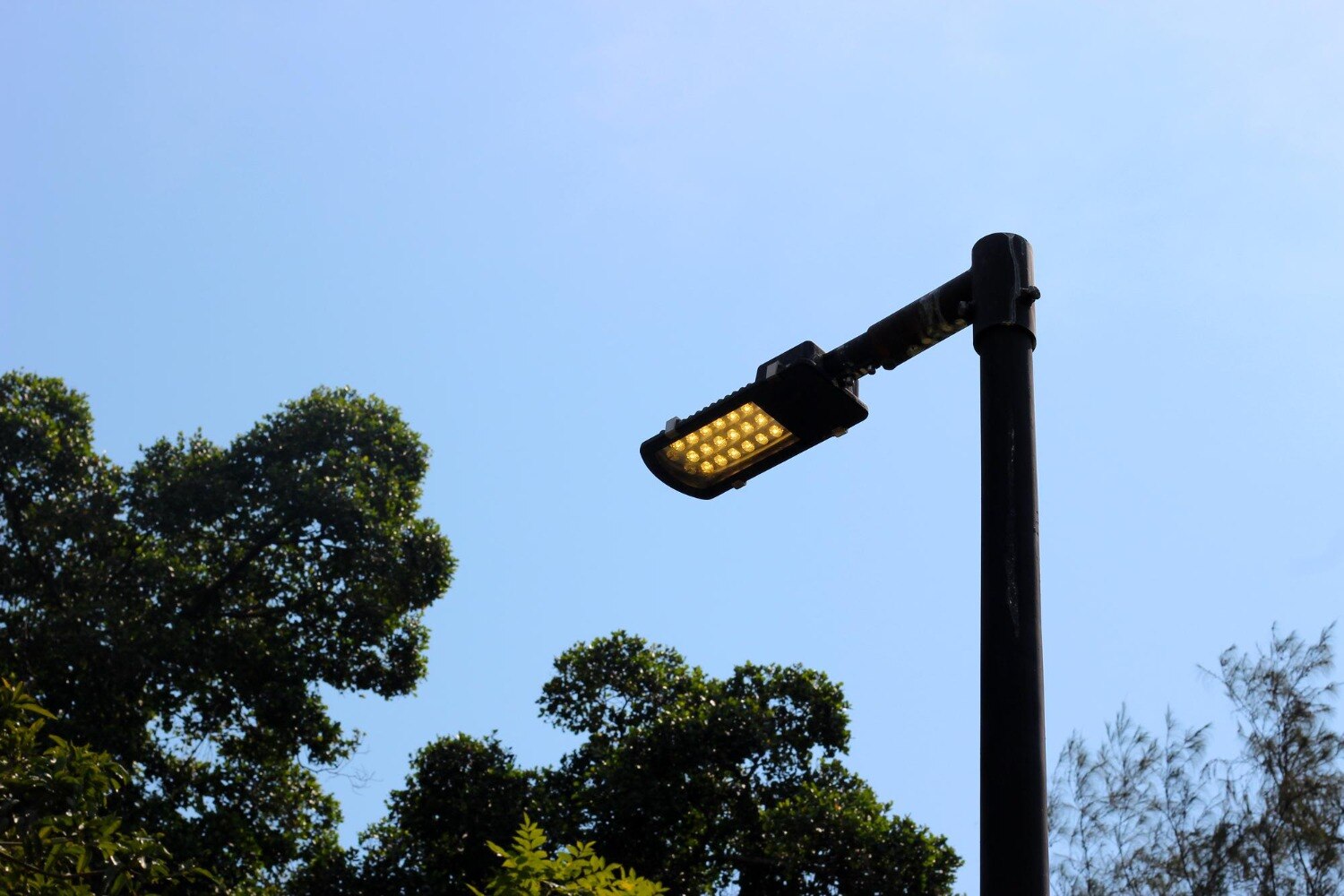
A high-lumen fitting is not automatically the right choice for a Delhi road or campus: lumens describe emitted light, while lux, uniformity, glare and maintenance determine what people actually see. You will be able to identify where higher output helps, set a defensible lighting target, estimate the installation geometry and compare fixture documents before approving a purchase.
Key takeaways
- Judge delivered light and uniformity, not catalogue lumens alone.
- Set illumination targets before selecting wattage, pole height or optics.
- Check spacing, mounting height and photometric files before approving a layout.
- Demand test reports, warranty terms and Delhi-suitable environmental specifications.
What “high lumen” means—and what it does not tell you
A high lumen street light in Delhi produces more visible light overall, but “high lumen” does not prove that a road will be evenly or comfortably lit. High brightness street lighting must be judged by where the light lands, not by the catalogue total.
| Measure | What it means | Why it matters |
|---|---|---|
| Lumens (lm) | Total visible light emitted | Indicates output, not road-level illumination |
| Watts (W) | Electrical power consumed | Indicates energy demand, not brightness by itself |
| Lux (lx) | Lumens received per square metre | Shows illumination on the carriageway or path |
| Candela (cd) | Light intensity in a particular direction | Reveals beam strength, glare risk and reach |
A 30,000-lumen luminaire can produce poor results if its optics, mounting height, pole spacing or tilt leave dark gaps. Candela distribution determines whether light reaches the road edges or shines into drivers’ eyes. A wider road also needs a different distribution from a narrow service lane.
Delhi’s dust, roadside deposits and air pollution reduce delivered light over time. Require a stated luminaire maintenance factor, cleaning plan and inspection schedule; initial lumens without maintained values overstate performance.
Before approving a high-lumen fixture, request its exact IES or LDT file, an LM-79-style photometric report and a road-lighting calculation showing pole height, spacing, carriageway width, surface assumptions, tilt and maintained illuminance. A higher lumen number alone cannot establish safety, uniformity or value.
Where higher-output lighting earns its place on roads and campuses
Use higher output where a lower-output fixture leaves dark gaps or cannot cover the required width—not simply where light looks brighter beneath a pole. A high lumen LED street light for benefits in Delhi earns consideration on broad arterials, junctions, medians, ramps, service lanes and high-mast areas where traffic conflict, spacing and visibility matter.
| Location | Higher output earns its place when | Lower output is preferable when |
|---|---|---|
| Arterials and medians | The carriageway is wide and the tested distribution supports the pole spacing | A narrow optic would create bright spots between poles |
| Junctions and ramps | Turning movements, conflict points and merges need consistent coverage | Mounting geometry already provides uniform illumination |
| Campus internal roads | Vehicles share space with pedestrians and routes remain active after dark | A roadway optic would spill light into rooms or residences |
| Parking areas and gates | Large paved areas, surveillance zones or vehicle queues require broad coverage | Lower mounting heights can provide uniform light with less glare |
| Walkways and landscaped zones | A specific security assessment justifies additional output | Pedestrian-scale optics provide better comfort and wayfinding |
Demand an LM-79-style photometric report and a road-lighting calculation; lumen output alone cannot prove spacing performance. Keep colour temperature separate from brightness, and reject excessive output with narrow optics that causes disability glare. Include photocells or scheduled dimming, a stated maintenance factor for Delhi dust and pollution, and a cleaning plan.
LED street light for roads is a performance choice, not a wattage label.
Set the target before choosing wattage, poles or optics
Choose the lighting class from the visual task, traffic speed, pedestrian exposure and conflict points, then specify maintained illuminance, uniformity and glare limits. Use IS 1944, Code of Practice for Lighting of Public Thoroughfares, with CIE 115:2010 for road-lighting classes and calculation.
Do not approve an LED street light for roads from its lumen figure alone.
- Mark each zone separately: carriageway, junction, median, service lane, parking area, walkway and gate.
- Set maintained values, not initial values. Include the luminaire maintenance factor so the installation still meets the target after dirt and lumen depreciation.
- Specify overall uniformity U0 as minimum maintained illuminance divided by average maintained illuminance. Set longitudinal uniformity where the road class requires it.
- Set a glare limit in the calculation. For many motor-traffic applications, a threshold-increment limit of 15% is a practical starting brief; confirm the final value against the selected CIE or IS class.
- Reject a high brightness street lighting proposal if it meets average lux only by creating bright patches beneath poles, dark gaps between poles or direct views of LEDs.
| Zone | Preliminary maintained illuminance | Uniformity and glare brief |
|---|---|---|
| Arterial road or junction | 15–20 lux | U0 at least 0.40; check longitudinal uniformity and TI limit |
| Internal campus road | 10–15 lux | U0 at least 0.40; control views toward drivers and residences |
| Parking or gate area | 10–20 lux | U0 at least 0.25; prevent glare at booths and entrances |
| Walkway or pedestrian path | 5–10 lux | U0 at least 0.25; use pedestrian criteria rather than roadway optics |
Treat these figures as a design brief, not a universal Delhi requirement. Require a point-by-point photometric calculation showing maintained lux, U0, longitudinal uniformity, threshold increment, spill light and the proposed spacing-to-mounting-height ratio before choosing wattage or optics.
Calculate spacing, mounting height and delivered light
A 10-metre pole does not automatically light a 10-metre carriageway. Required lumens come from the light reaching the pavement at design points after optics, geometry and maintenance losses, not from the luminaire label.
Start the calculation with:
- carriageway width and target maintained lux or luminance;
- pole spacing, mounting height and arrangement: one-sided, opposite or staggered;
- setback from the kerb, bracket outreach and fixture tilt;
- road-surface reflectance, operating hours and luminaire maintenance factor;
- photometric distribution, such as narrow, medium or wide road optics.
Spacing divided by mounting height is a critical test. A high lumen street light in Delhi can use wider spacing only when its tested distribution produces the required maintained illuminance and longitudinal and overall uniformity at that ratio.
A narrow optic on widely spaced poles leaves dark bands; a wide optic aimed too steeply wastes light beyond the carriageway and creates glare.
Request an LM-79-style photometric report and a calculation grid showing initial and maintained results. Check points across lanes, edges and conflict areas, not only the average. A 12-metre road with 30-metre spacing, 9-metre mounting height and 1-metre setback needs a different optic and output from the same road with 20-metre spacing.
Do not choose an LED street light for roads by multiplying target lux by area alone: tilt, candela distribution and depreciation determine delivered light.
Specify a Delhi-ready luminaire and verify the supplier’s evidence
Approve a high-lumen LED street light only after the supplier proves delivered performance, not catalogue lumens. A street light manufacturer in Delhi should provide the exact IES or LDT photometric file, an LM-79-style test report, and a road-lighting calculation showing maintained illuminance, uniformity, glare, spacing and mounting height.
Request these documents before signing:
- Tested input power, power factor and total harmonic distortion
- Surge-protection rating, operating-temperature range, and driver make and model
- Stated IP and IK ratings, with the test standard and report reference
- Warranty period, exclusions, and spare-driver availability
- Luminaire maintenance factor, plus a cleaning and inspection schedule
| Evidence | What it proves | Reject it when |
|---|---|---|
| IES/LDT file and photometric report | The optic supports the proposed spacing-to-mounting-height ratio | The supplier offers only lumen output |
| IP and IK test records | Resistance to Delhi dust, rain, impact and roadside deposits | Ratings appear without test details |
| Road calculation | Light levels remain adequate after depreciation | It uses initial lumens without a maintenance factor |
| Electrical and thermal data | Power, heat and grid compatibility are understood | Temperature range, THD or surge rating is missing |
Treat “high lumen led street light for benefits in delhi” as a search phrase, not an approval criterion. Ask Kozon India Solutions Pvt Ltd for this evidence when comparing its proposed fixture with alternatives, especially if a 200W or 300W model is expected to replace poles or widen spacing.
Related products
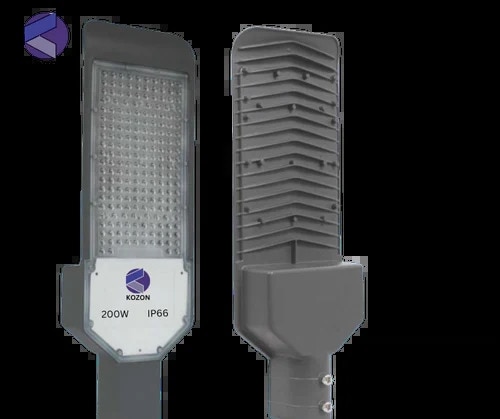 | Street Light 200W LENS ECO MODEL STREET LIGHT ₹2100 Minimum order quantity: 2 Piece Discover the future of street lighting with our cutting-edge LED Street Lights at KOZON INDIA! As a trusted provider... View product → |
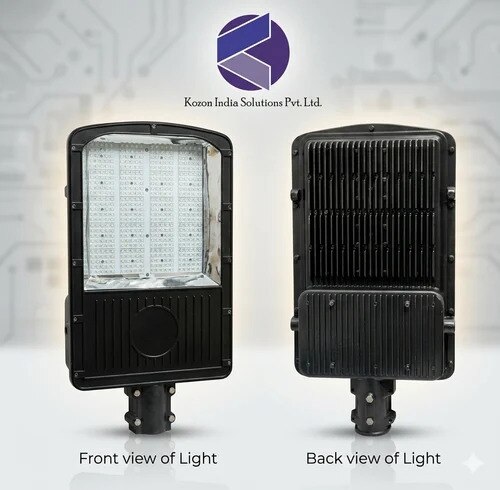 | Street Light ₹3600 Minimum order quantity: 5 Piece 300W LED Street Light – High-Performance Glass Series Engineered for Superior Illumination & Reliability Illuminate... View product → |
Frequently asked questions
What does “high lumen” mean for a street light?
It describes the luminaire’s total visible-light output, but it does not show how evenly that light reaches a road or campus.
Where do higher-output LED street lights earn their place?
They suit roads, junctions, large campuses and other areas that need wider coverage or higher target illumination when the optics and layout are correct.
How do you choose wattage, pole spacing and optics?
Set the required illumination and uniformity first, then use mounting height, road width, spacing and photometric data to select the luminaire.
What supplier evidence should you verify in Delhi?
Request the photometric file, test reports, ingress and impact ratings, warranty terms, driver details and evidence that the proposed layout meets its target.
Related products
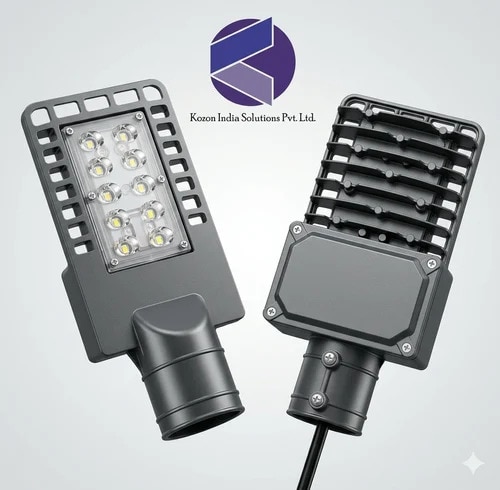 | Street Light ₹700 Minimum order quantity: 6 Piece High Lumen LED Street Light SeriesBy Kozon India Solutions Pvt. Ltd. At Kozon India Solutions Pvt. View product → |
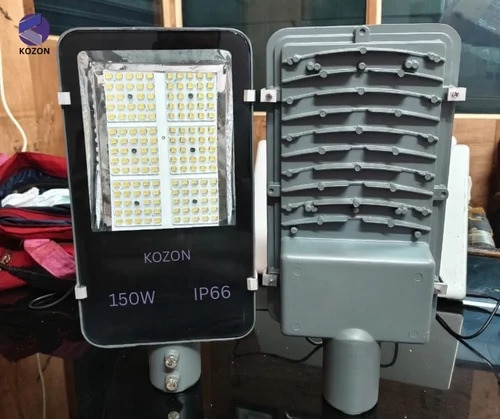 | LED Street Light 150W GLASS MODEL LED STREET LIGHT ₹1900 Minimum order quantity: 10 Piece Discover the future of street lighting with our cutting-edge LED Street Lights at KOZON INDIA! As a trusted provider... View product → |
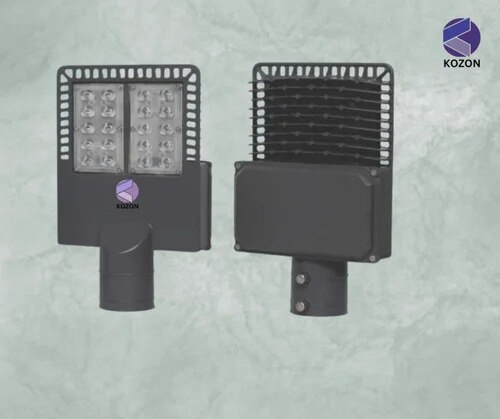 | LED Street Light ₹1500 Minimum order quantity: 10 Piece Discover the future of street lighting with our cutting-edge LED Street Lights at KOZON INDIA! As a trusted provider... View product → |
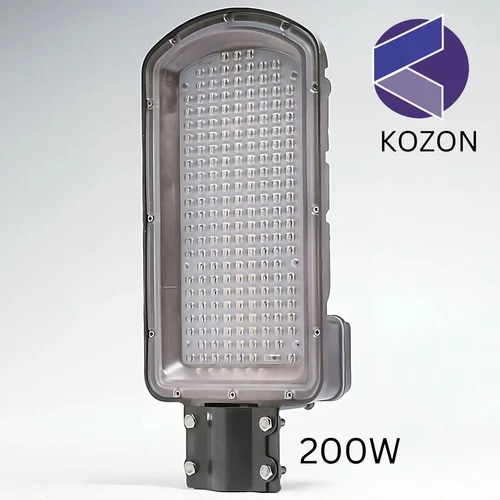 | Street Light ₹2300 Discover the future of street lighting with our cutting-edge LED Street Lights at KOZON INDIA! As a trusted provider of high-quality lighting... View product → |
Keywords