


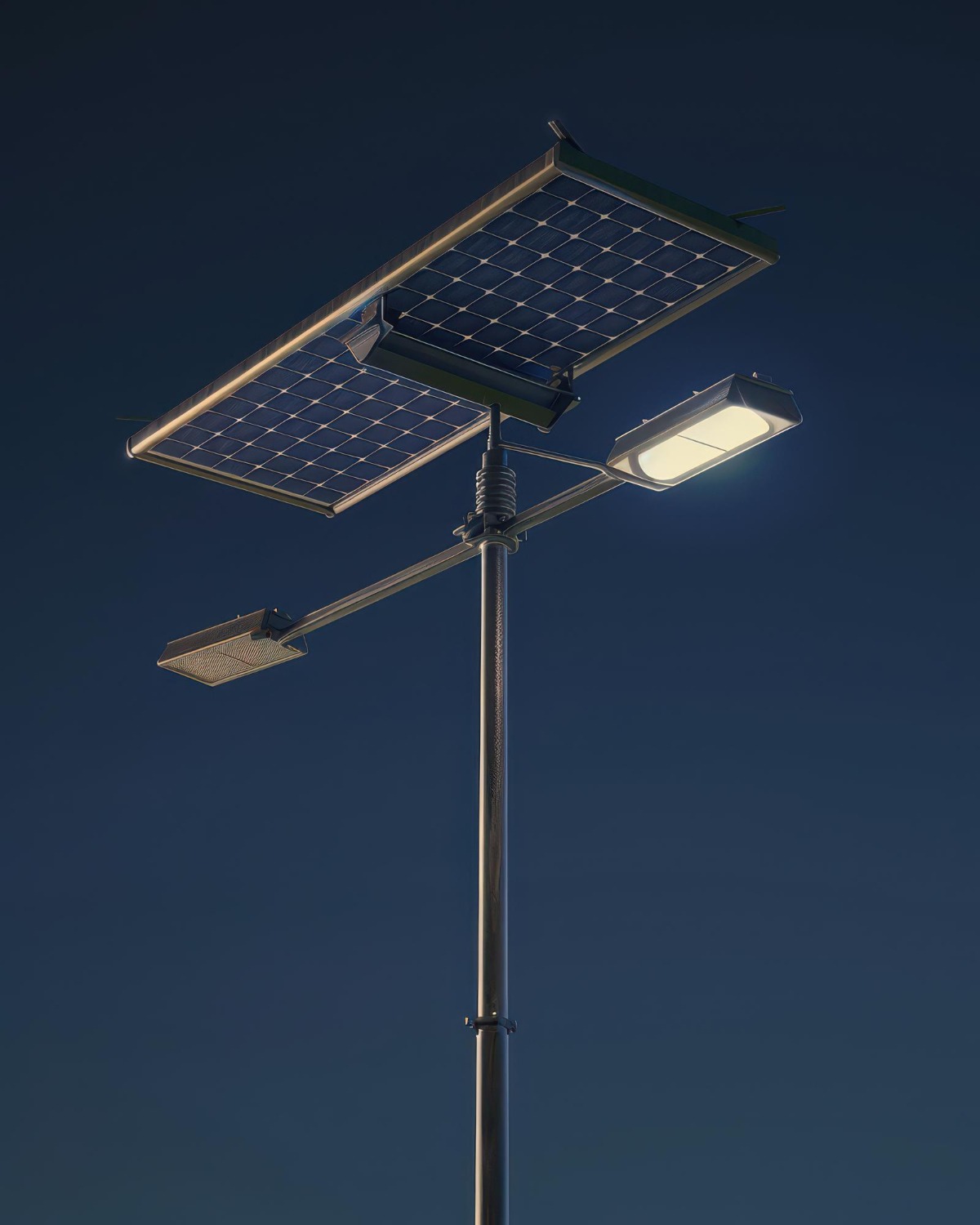
Choosing between solar and grid-connected street lighting is not simply a question of which technology is newer. The more useful comparison is whether the lighting system matches the site's power availability, operating requirements, maintenance conditions, and installation constraints.
When evaluating Solar Street Light Manufacturers in Delhi/NCR, buyers should look at the complete system rather than only the LED luminaire. Solar street lighting may include the light fixture, photovoltaic panel, battery, controller, pole arrangement, mounting hardware, and associated electrical components.
Conventional street lights draw electricity from the grid. This can make them practical where dependable electrical infrastructure already exists. Solar street lights, by comparison, can reduce dependence on underground or overhead power distribution at suitable sites.
The two approaches differ in several areas.
Infrastructure requirements: Grid-connected lighting may require cabling, electrical panels, trenching, and power availability. Solar systems generate energy locally but require adequate panel exposure and correctly sized energy-storage components.
Site suitability: Solar lighting can be useful for internal roads, campuses, pathways, developing areas, remote locations, and sites where extending electrical infrastructure is inconvenient. Shading from trees, buildings, or other structures can affect solar generation and should be assessed before installation.
Energy storage: Battery capacity is a critical part of solar street lighting. Buyers should examine expected operating hours, charging conditions, battery specifications, and system configuration rather than comparing only luminaire wattage.
Maintenance: Both systems require maintenance, although the components differ. Solar installations may require attention to panels, batteries, controllers, fixtures, and mounting structures.
Delhi and the broader NCR experience seasonal changes in sunlight, dust, heat, rain, and winter conditions. These environmental factors make correct system sizing and component selection important.
Kozon India Solutions Pvt Ltd manufactures lighting solutions for infrastructure applications, including requirements where solar street lighting may be considered. Project evaluation should include road dimensions, pole locations, expected night-time operating duration, shading, and site access.
Cost comparisons should also account for more than the purchase price. Grid infrastructure work, cabling, civil work, electricity consumption, battery replacement considerations, and maintenance requirements can all influence lifecycle economics.
Solar lighting is not automatically the correct choice for every road, just as conventional lighting is not always the most practical solution. The better decision comes from evaluating power availability, solar exposure, installation complexity, usage pattern, and maintenance capability.
For Delhi and NCR projects, a site-specific assessment can clarify whether solar street lights, conventional street lights, or a combination of both provides the more practical approach.