Factories, warehouses, logistics centres, workshops, and large production facilities often have ceilings that are considerably higher than those found in conventional offices or retail spaces. Lighting such environments requires fixtures capable of delivering useful illumination from greater mounting heights.
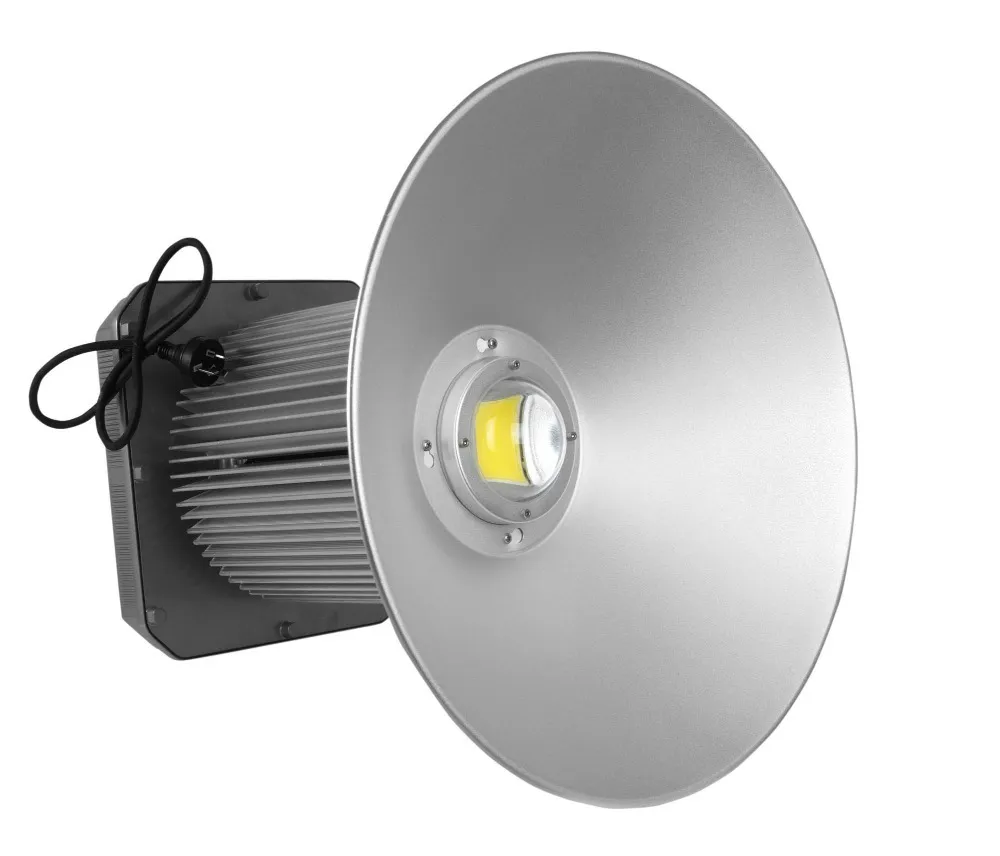
This is where LED Hi-Bay Light Manufacturers in Delhi/NCR serve a specific industrial requirement. Hi-bay lights are generally designed for elevated installation, where optical control, lumen output, thermal management, and fixture reliability become particularly important.
The first consideration is mounting height. A fixture installed at a moderate height does not require the same output and beam characteristics as one positioned much higher above a warehouse floor. Buyers should therefore avoid choosing hi-bay lights based solely on wattage.
Beam angle can significantly influence the result. Narrower distributions may be useful when illumination needs to travel farther from a high mounting point, while wider distributions can help cover broader areas where mounting conditions permit.
Industrial buyers should also consider the activity taking place below the lights. A general storage area may have different illumination requirements from an assembly line, inspection station, packing area, or material-handling zone.
Useful factors to assess include:
- Ceiling and mounting height
- Floor dimensions
- Required illumination level
- Rack or machinery placement
- Beam distribution
- Fixture spacing
- Operating hours
- Driver characteristics
- Thermal management
- Dust and environmental conditions
Delhi and surrounding NCR industrial zones contain diverse facilities, from manufacturing units and warehouses to distribution centres and engineering workshops. Each can require a different lighting layout even when the buildings appear similar in size.
Kozon India Solutions Pvt Ltd manufactures LED lighting solutions that can be considered for commercial and industrial applications. For a hi-bay project, sharing layout information with the manufacturer can make product selection more precise. Dimensions, mounting heights, machinery positions, and existing electrical arrangements provide useful context when evaluating fixture specifications.
Energy consumption deserves attention because industrial lighting may operate for long shifts. However, replacing existing fixtures with lower-wattage LEDs without checking illumination requirements can produce an unsatisfactory result. Energy efficiency should be considered alongside actual usable light.
Maintenance access is another practical issue. Since hi-bay fixtures are mounted at substantial heights, frequent servicing can interrupt operations and require access equipment. Fixture construction, thermal performance, electrical component quality, and installation practices therefore matter over the operating life of the system.
Good industrial lighting begins with the work environment rather than the catalogue. Evaluating mounting height, work activity, beam distribution, fixture placement, and operating hours provides a much stronger basis for selecting hi-bay lighting for facilities across Delhi and NCR.
Keywords